

❋
Reducing Cortisol is Key
In this episode of Trust Your Gut with Tania, I explore the idea that anxiety can sometimes become a learned habit or “worry loop” rather than something we simply have to live with. Drawing from my own experiences with stress, sleep, and chronically elevated cortisol, I share how becoming curious about the patterns happening in our bodies can give us a powerful starting point for change.
We’ll talk about the connection between stress, cortisol, the brain, and behavior—and how understanding your own patterns can feel like discovering your personal “owner’s manual.” I also share my personal experience experimenting with lithium orotate and how it affected my stress, sleep, and ability to pause before reacting.
This is a personal story and an exploration of emerging ideas—not a prescription—but if you’ve ever wondered why you seem to thrive on stress or find yourself caught in a constant cycle of worry, this conversation may give you a few new things to think about.
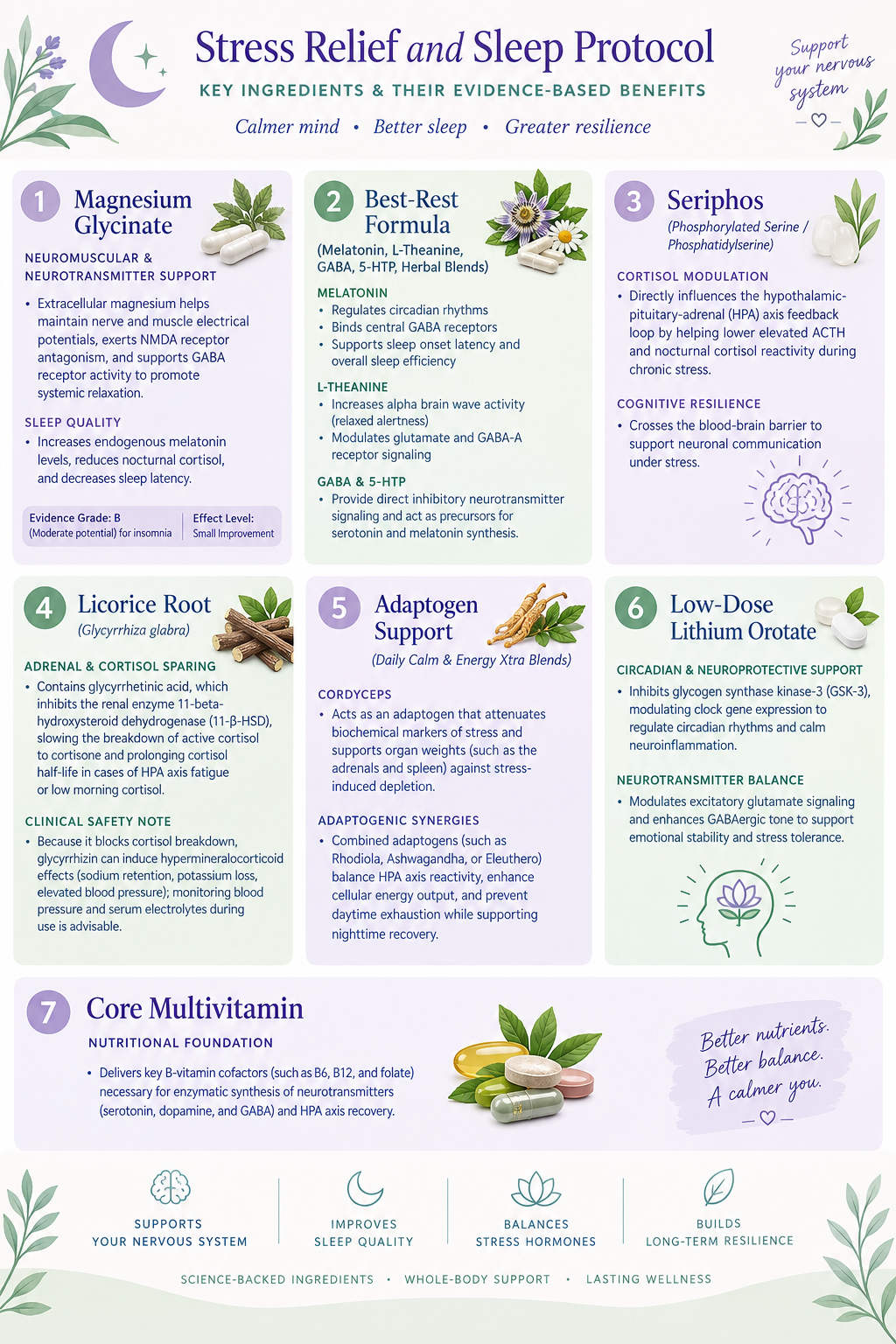
Individual results vary. Supplements are intended to complement—not replace—a healthy diet, lifestyle, and appropriate medical care.

Sleep Hygiene: Simple Habits for Better Sleep
Good sleep isn't just about what you take before bed. Your daily routines, environment, and nervous system all play a role in helping your body recognize when it's time to wind down and rest.
-
Go to bed and wake up around the same time each day—even on weekends.
Aim for enough time in bed to get approximately 7–9 hours of sleep.
Let your body develop a predictable rhythm.
-
Get outside for 10–30 minutes of natural light soon after waking.
Morning light helps signal to your brain that the day has begun and supports a healthy circadian rhythm.
If possible, combine morning light with a gentle walk.
-
Alcohol may make you feel sleepy initially but can interfere with sleep quality and cause more nighttime waking.
If you're drinking, notice how it affects your sleep and recovery.
-
Reduce phones, computers, television, and other stimulating screens 30–60 minutes before bed.
Dim the lights in your home as bedtime approaches.
Consider using your bedroom as a screen-free zone.
-
Give your brain and body predictable signals that the day is ending. Try:
A warm shower or bath
Gentle stretching
Reading
Breathwork or meditation
Journaling
Kundalini Yoga or another calming practice
A relaxing sound bath or calming music
-
Aim for a bedroom that is:
Cool
Dark
Quiet
Comfortable and uncluttered
Blackout curtains, an eye mask, earplugs, or a white-noise machine can be helpful if your environment is disruptive
-
Avoid very large or heavy meals immediately before bed.
If you need a snack, choose something that feels satisfying without causing digestive discomfort.
Pay attention to foods that personally interfere with your sleep.
-
Stay well hydrated during the day, but consider reducing large amounts of fluid close to bedtime if nighttime bathroom trips interrupt your sleep.
-
Regular physical activity can support better sleep and help regulate stress.
Try to get movement earlier in the day when possible. If vigorous exercise close to bedtime leaves you feeling energized rather than relaxed, move it earlier.
-
If your mind races at night, try a “brain dump” before bed.
Write down:
Things you need to remember
Tomorrow's priorities
Worries or unfinished tasks
One thing you're grateful for
The goal isn't to solve everything—it's to give your brain permission to put it down for the night.
-
If you're lying awake and becoming frustrated, get out of bed for a quiet, relaxing activity until you feel sleepy again.
Try not to turn your bed into a place associated with worrying about whether you're sleeping.
Your Routine Matters More Than Perfection
You don't have to do everything perfectly. Start with one or two habits that feel realistic and build from there.
The goal isn't perfect sleep hygiene.
The goal is creating an environment where sleep comes more naturally.
Best Practices for a Digital Detox

Clear digital clutter and restore your inner glow. These tips and tricks will help you reduce screen time, create mindful tech habits, and transform your digital life into a source of calm rather than chaos. Let’s dive into the magic of unplugging!
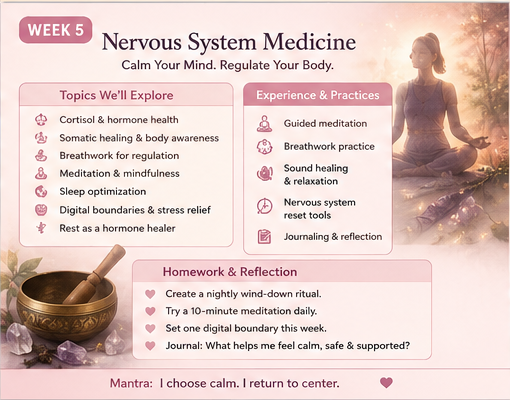
I choose calm. I return to center.
What’s Next?
Week 6 - The Integration Ceremony
Bring everything together into a sustainable lifestyle.
Topics include:
Creating your personalized Moon & Hormones plan
Building daily rituals
Long-term habit formation
Maintaining momentum
Experience:
Moonlight & Medicine closing ceremony, cacao ritual, reflection, celebration, and next-step planning
Feeling Stuck?
Book an appointment for individualized guidance.


You don’t have to go it alone…